
A Common Endeavor: Spiritual Foundations of America’s Future
“Seeking the spiritual foundations of America’s future
From Capitol Hill to Chicago, a message from American Bahá’ís invites conversations on spiritual renewal, social trust, and the nation’s future.
WASHINGTON, D.C. — The United States is approaching the 250th anniversary of the Declaration of Independence—a moment of reflection, celebration, and for many, a moment of uncertainty. The country has seen generations labor to give fuller expression to the ideals named at its founding. Yet exhaustion, anger, and disillusionment amid polarization and conflict have become part of the atmosphere of public life. A letter from the American Bahá’í community points to a dimension less often examined. Some of the nation’s founding principles, including freedom, equality,and justice, it suggests, are not only civic aspirations. They are, in their essence, spiritual principles, whose fuller realization depends on the renewal of trust, love, moral courage, and a sense of shared purpose.
This is the central idea animating “A Common Endeavor: Realizing the Promise of America,” a letter from the Bahá’ís of the United States addressed to “all who hold the promise of America in their hearts.” Released as the country approaches its anniversary, the letter invites thoughtful conversation about the moral and spiritual foundations of social progress and the capacities needed for a diverse people to move forward together.
One expression of that invitation has been a series of public gatherings convened by the U.S. Bahá’í Office of Public Affairs, bringing together leaders of thought from government, civil society, academia, and the media, as well as representatives of faith communities and participants in grassroots community-building efforts. Each gathering has explored a particular theme raised by the letter—from the role of religion in society to the foundations of social trust and the stirrings of spiritual renewal in public life.
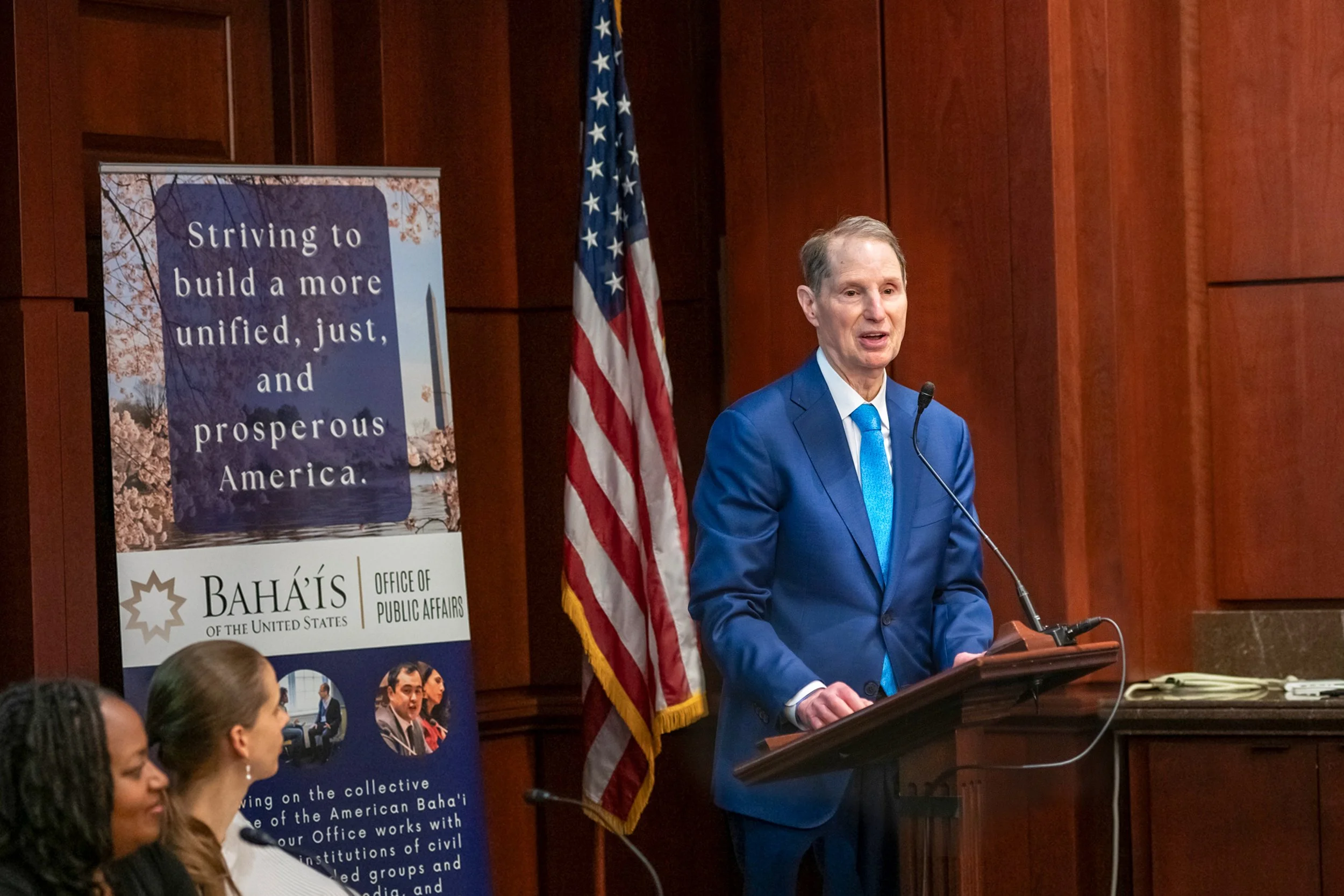
Senator Ron Wyden of Oregon opened the panel discussion held on Capitol Hill. The discussions unfolded around the theme of social trust: what sustains it, how it frays, and how it might be rebuilt.
. . . on Capitol Hill, a gathering had taken up the question of social trust: what sustains it, how it frays, and how it might be rebuilt. The session was co-sponsored by Senator Ron Wyden of Oregon, who likened the letter’s spirit to what he called the ‘Oregon Way’: the patient habit of bringing people together across distance and disagreement. The work of getting across “traditional divides,” Senator Wyden said, was “so essential” at a moment when so much in public life pulls people apart.
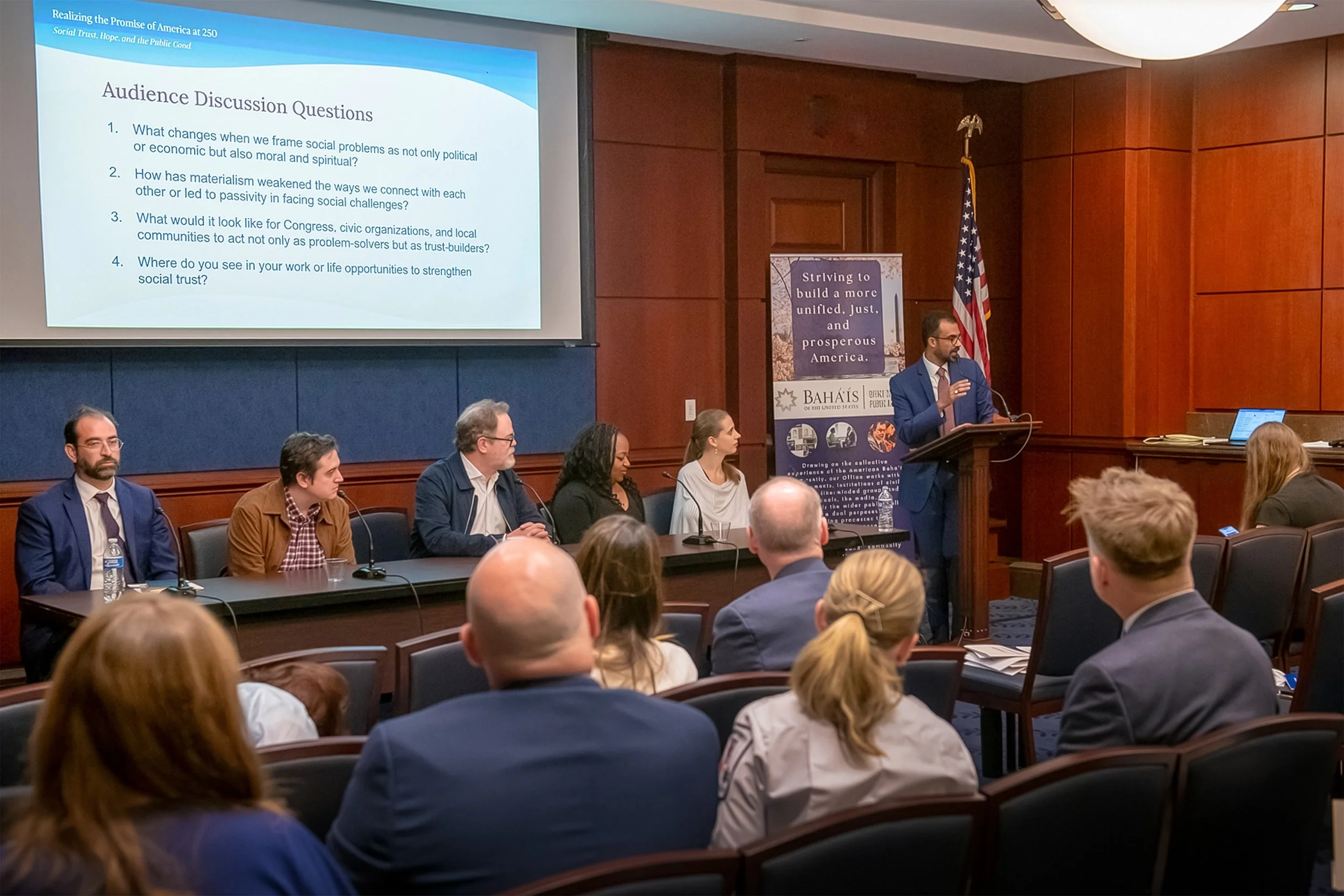
View of the panel at the Washington D.C. event on Capitol Hill. From left to right: Michael Toscano, Director of the Family First Technology Initiative; Pete Davis, writer, filmmaker, speaker, and civic advocate; Rainn Wilson, actor and member of the Bahá’í community who was moderating the panel; Jasmine Miller-Kleinhenz, Assistant Professor at the University of Mississippi Medical Center and member of the Bahá’í community; Karissa Raskin, CEO of Listen First Project; and PJ Andrews, member of the Office of Public Affairs who was introducing the event.
From Capitol Hill to Chicago, a message from American Bahá’ís invites conversations on spiritual renewal, social trust, and the nation’s future.
On Capitol Hill
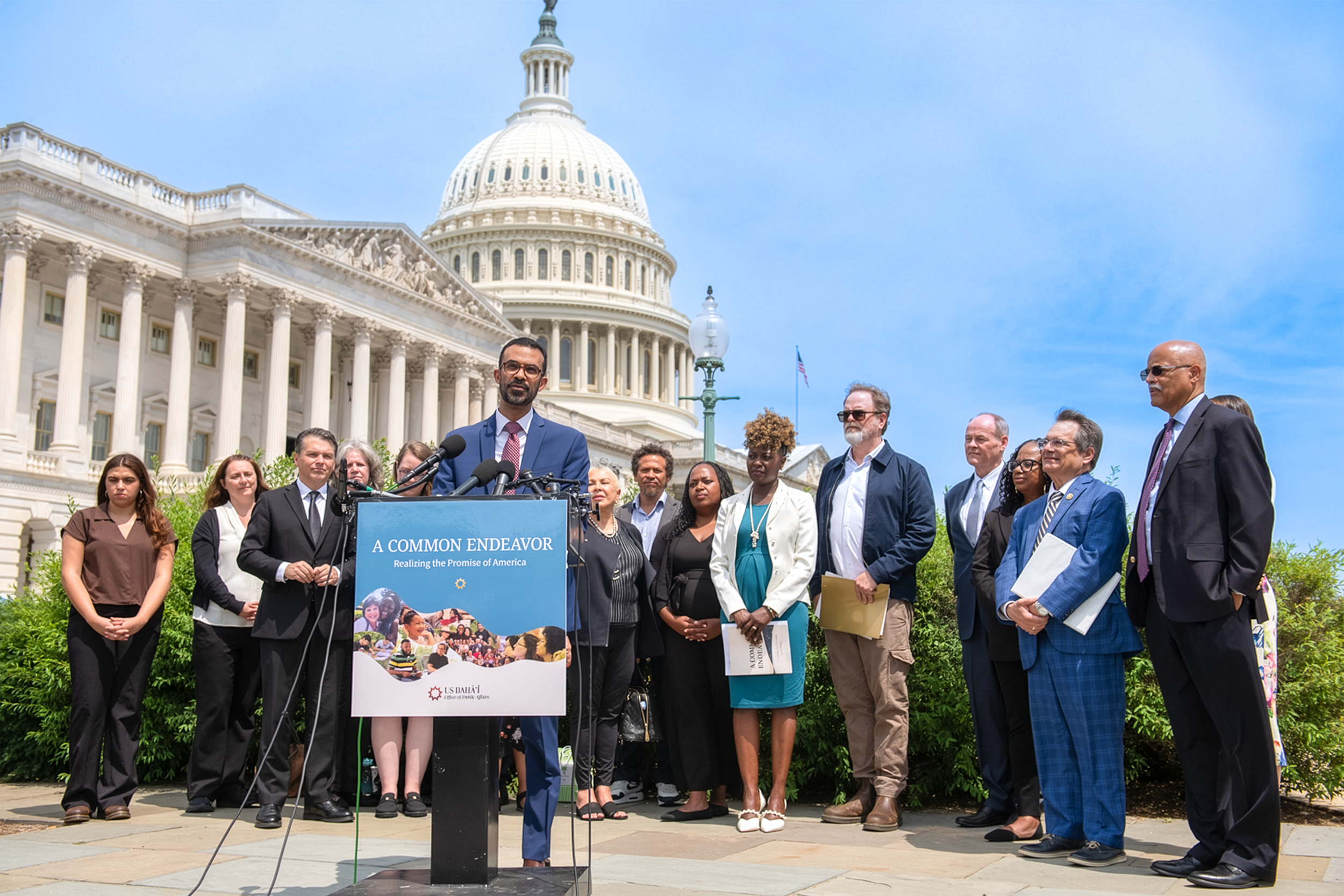
At a recent press conference on Capitol Hill, Member of Congress Brendan Boyle of Pennsylvania reflected on the need to recover a sense of shared purpose in a divided time. Standing with representatives of different faith traditions, he pointed to the Bahá’í teaching that all people are as “the fruits of one tree and the leaves of one branch.”
“No matter our political party, our ethnicity, our background, our faith,” he continued, “we are brought together, bound together by our shared humanity and our shared purpose as Americans.”
Member of Congress Brendan Boyle of Pennsylvania (left) opened the press conference on Capitol Hill pointing to the Bahá’í teaching that all people are as “the fruits of one tree and the leaves of one branch.” Member of Congress Gus Bilirakis of Florida (right) later echoed this thought reflecting that the American story, he said, “is not one of uniformity. It is one of unity amid diversity.”
Member of Congress Gus Bilirakis of Florida described the anniversary as a moment to look to “the kind of future we wish to build.” The American story, he said, “is not one of uniformity. It is one of unity amid diversity.” Spiritual renewal, he added, does not require people to “think alike or worship alike,” but invites a rediscovery of the values that bind people together: “humility, compassion, gratitude, service to others, and a commitment to the common good.”
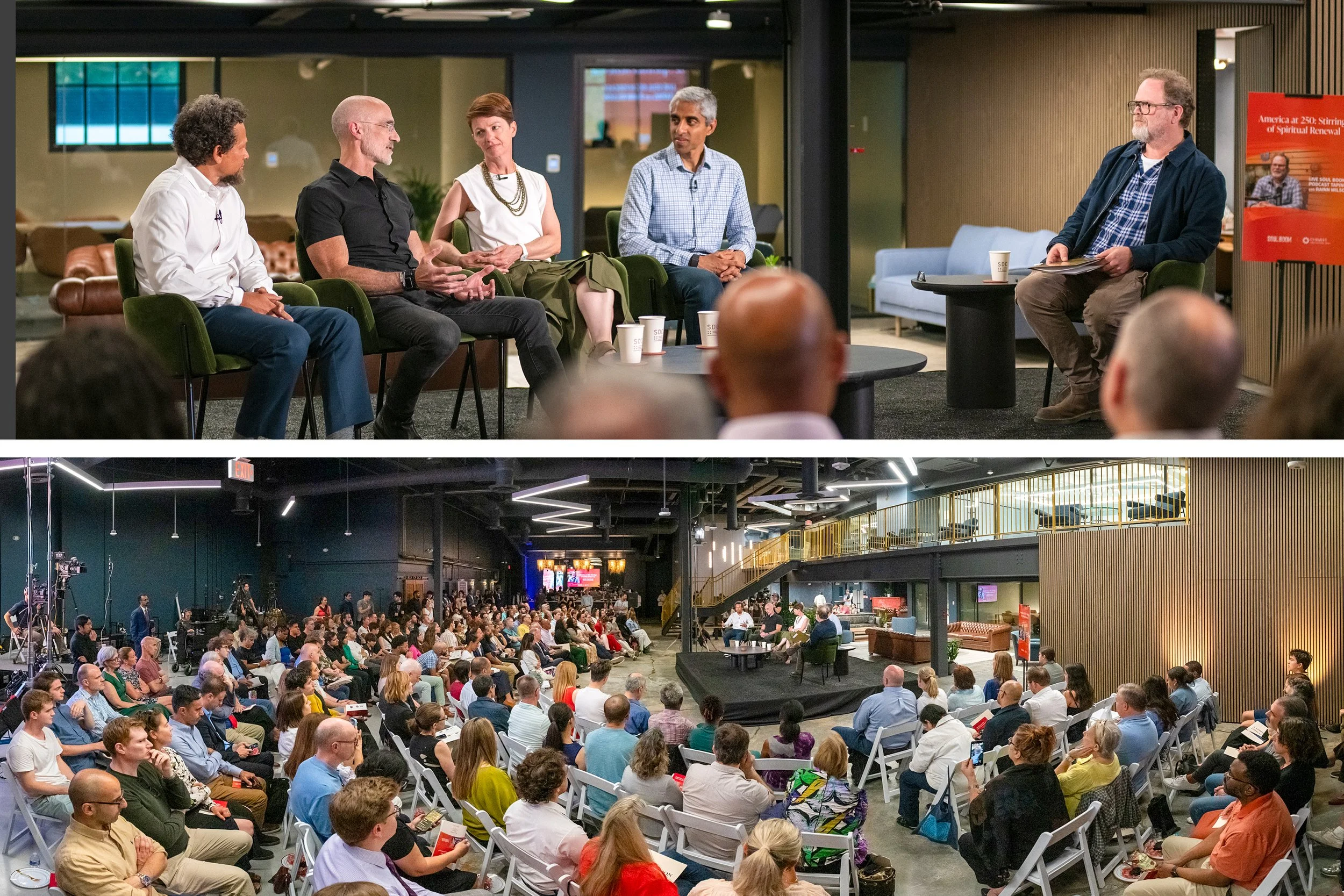
Top: Panelists at the panel and live recording of actor Rainn Wilson’s podcast “Soul Boom”, from left to right: Derik Smith, professor in the Department of Literature at Claremont McKenna College and member of the Bahá’í community; Arthur Brooks, Harvard professor of business and author; Amanda Ripley, author on conflict resolution; Vivek Murthy, former U.S. Surgeon General and author; and Rainn Wilson who was moderating the discussion.
Bottom: View of audience at the event.
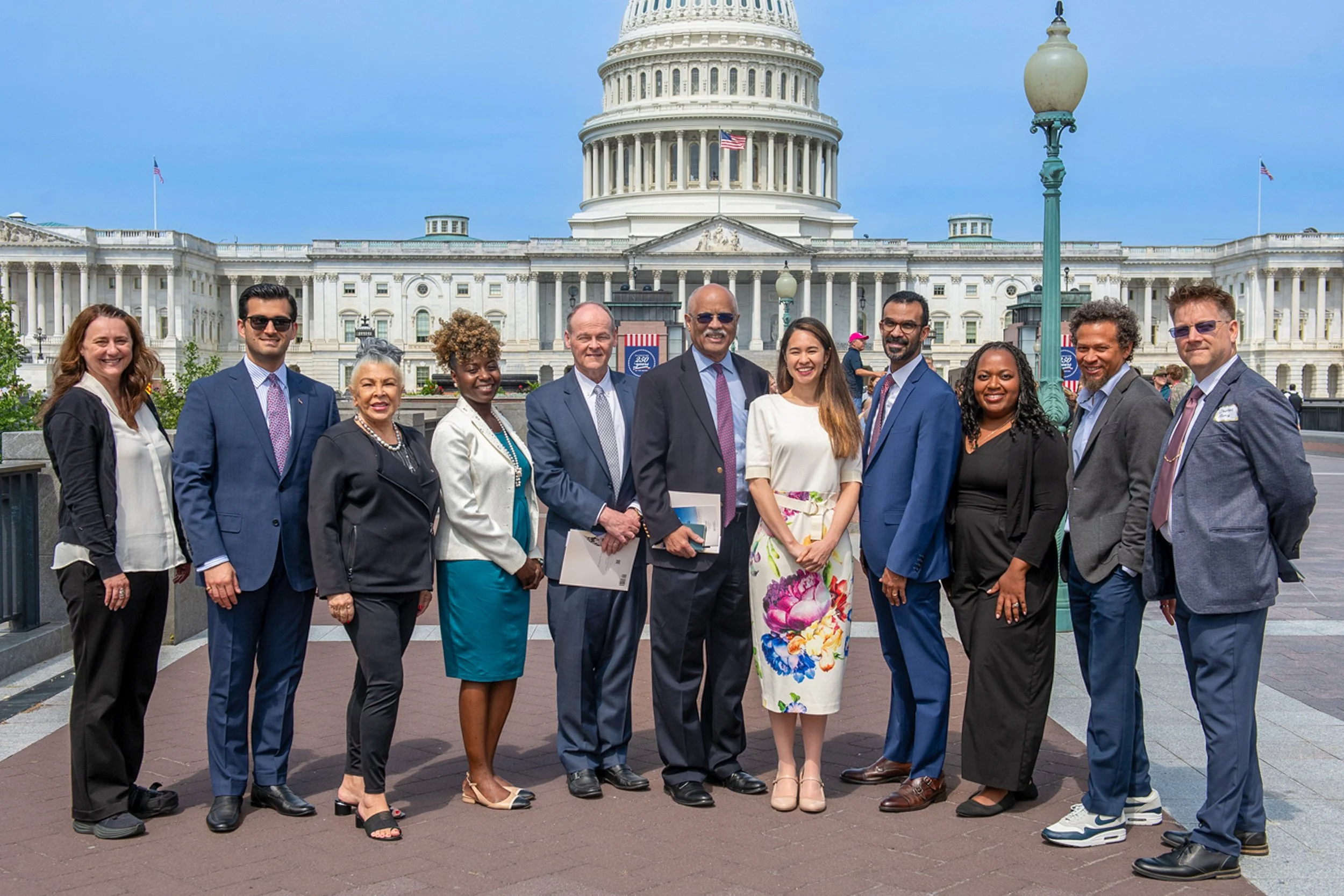
Group photo of part of the Bahá’í Delegation to the recent events held on Capitol Hill.
Read or listen to this entire article.
All images copyright Bahá’í World News Service.
Related post: A message for all Americans, this livestream from the 2025 Bahá’í National Convention was broadcast on April 26, 2025. It explores the profound challenges and opportunities facing America today.